Veteran's Health Administration
I was detailed through the U.S. Digital Service to build the research and design practice at the Veterans Health Administration's first Digital Health Office. We introduced a product operating model to steward enterprise technology decisions across 170 hospitals nationwide, working closely with the National AI Institute, Emerging Tech, the Office of Connected Care, and the Office of Health Informatics to integrate their work into a unified approach. We drove innovation with research insights and service design, introduced standards, agile ceremonies, and practice playbooks. I was later converted to a permanent role as the practice's federal director.
The work spanned strategy, research, and design at enterprise scale: reframing VA's goals around lived experience instead of abstract targets, building the synthesis and prioritization standards the office still runs on, and evaluating where AI could responsibly reduce burden on Veterans, their clinicians, and the healthcare teams that serve them.
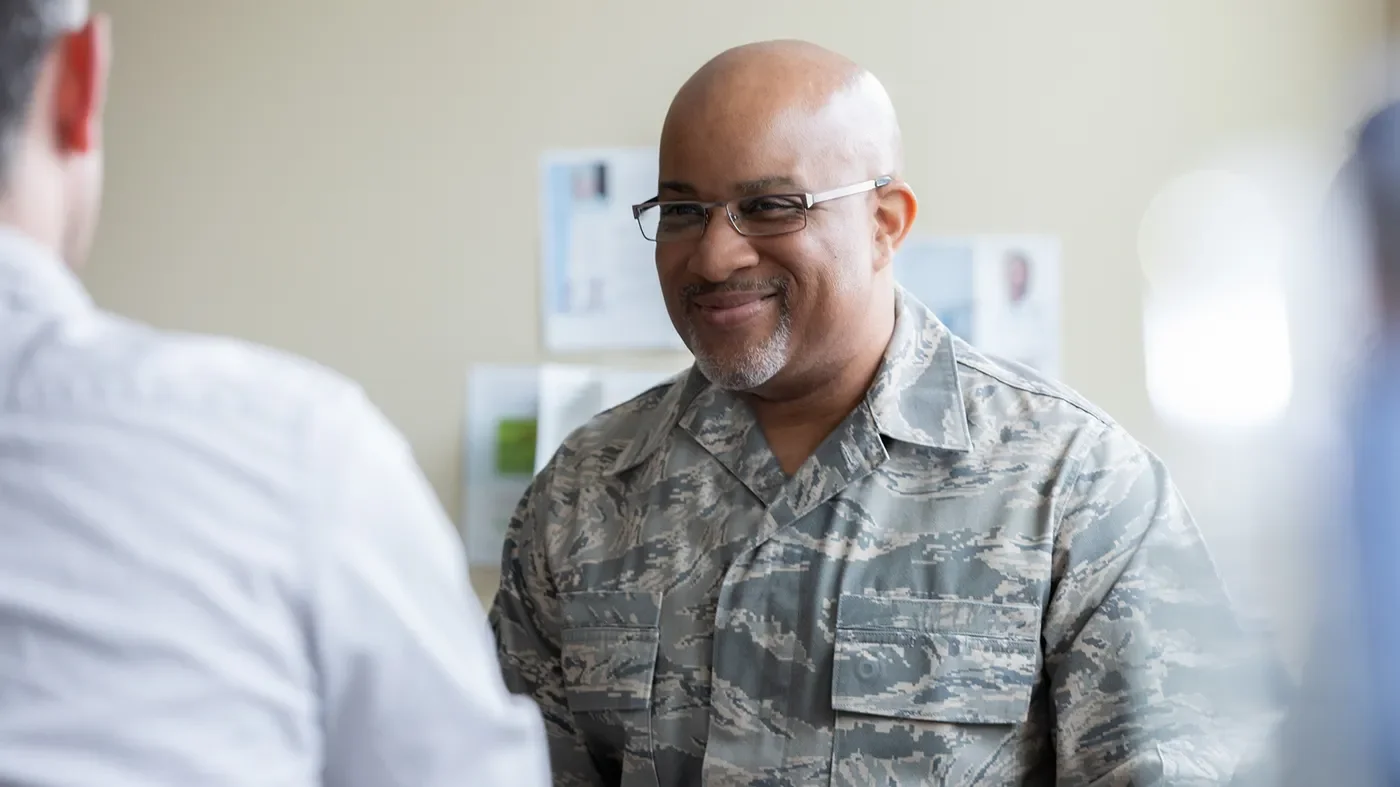
One example of a Digital Health Office effort is Ambient Scribe, an AI transcription service for health encounters to support the human connection between Veterans and their doctors. At the Kansas City VA Medical Center, a 90-day evaluation found all 18 participating clinicians wanted to keep using Ambient Scribe — saving most providers one to two hours of after-hours documentation time, with Veteran satisfaction on "felt listened to" rising nearly 3 points over the same period.
(image: Kansas City VAMC Ambient Scribe photo, credited "Photo: VA News," linked to the article)
Building Inside a Changing System
Government work doesn't hold still. Budgets shift mid-year. Staffing changes with little warning. Priorities move when leadership changes or a directive comes down. I built the Veterans Health Administration's Digital Health Office research and design practice inside that reality.
I started with a robust team. Partway through, a federal workforce directive and other administrative changes dramatically reduced those resources. Our North Star didn’t change, our resources to do it the original way did.
The Pivot
I rescoped to the critical path — the work most directly tied to our revised priorities and let the rest wait. I borrowed resources the team no longer had internally. I kept building the standards the practice needed while planning for the headcount to do that work justice. And with no team left to defer decisions to, I took on facilitating the executive alignment conversations directly.
Practice Foundations
Before the disruption, the approach already had structure: workshops that reframed VA's goals as lived experiences instead of abstract targets, synthesis work that turned research into a set of themes — access and continuity, quality and standards, the cost of administrative burden — and problem statements written in the Veteran's own voice, each traced to a measurable value for the people experiencing it.
What This Work Shaped
The practice helped build user-centered AI use cases across the health system — grounding new AI capabilities in what clinicians and Veterans actually needed, not just what was technically possible. It also shaped strategy and value mapping for a Unified Health Care Experience: a connected view of care across before, during, after, and ongoing management, instead of disconnected visits and systems that don't talk to each other.
To dive deeper into this case study, please inquire.